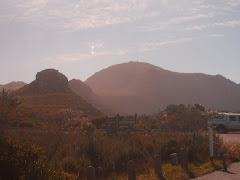
I wake up at about 6:00am. I wipe the sleep from my eyes and study my environment to be sure I have a grasp on what is going on. One friend that I came with is asleep in the back seat. His wife is gone, I’m certain she is preparing breakfast for the whole lot. I don’t see anybody else I know. I get out, stretch and see the sun is just peaking over the mountain. Trickles of hot sun pour through gaps in the mountain caps onto the rolling African fields. The sight is beautiful and makes me smile.
I dizzily mill around until I find somebody that I know. I was told then that I missed the best part of the wedding. I’m thinking “when exactly did this occur?”. I had heard about this part of the wedding. There is an on-going friendly rivalry between the bride’s side and groom’s side. Often before the wedding ceremony takes place there are a variety competitions. One competition is based on traditional dancing. I was told it was a great showing, but the bride’s side lost. I guess I’ll catch the next one.
Just then, I feel a tug. I look over my shoulder and am told to go immediately to the rondeval up the hill. “Are you sure?” I probe suspiciously. This news is suspect because last night I was told that I was strictly allowed only in certain areas; areas designated specifically for the bride’s family. And there was a rumour, which was later confirmed, that one of the bride’s guests wandered out of bounds and was caught. He was taken by the groom’s family- an embarrassment for the bride- only to have the elders from the bride’s family negotiate “bail” for his release. “I’m not falling for this one”, I think. I gaze into his eyes ensuring his honesty. My gut tells me it is now al right to do so, however I’m not sure why. I walk up the steep dirt road squinting as I face the sun now fully peaked over the mountains.
Outside the rondeval I am directed to be quiet and to go inside and sit on the right. I walk in and the room is full. Mostly full of ‘younger’ people (under 50 years or so). Some of the occupants are wearing traditional dance wear and I assume most didn’t get the luxury of the three hour nap that I had. But the people were vibrant and intent as they watched one after another stand up and vehemently argue... well, something that seemed very relevant and profound. I realized shortly afterward that I was instructed to sit on the right because the right side was the bride’s side and competition of oratory mastery was taking place. The Xhosa was too deep for me to understand much of it, but I could tell by the body language and intonation of the orator as well as the body language of the audience that our side was doing well.
Upon conclusion, a gentleman from the right side of the room greeted somebody from the left side of the room. They spoke briefly then the first gentleman seized the unopened bottle of brandy that had been lying in the center of the rondeval. Again, he spoke some words. Then he took a tot. Tots were then passed around and offered to everybody on the right side, the winning side. When everybody who chose to had their fill, the bottle was then given to those on the other side of the room. Afterwards, we leave to our separate compounds to prepare for the ceremony.
Tuesday, November 30, 2010

Tiba: the ceremony
I avoid breakfast by retreating to my car. I find my toiletry bag, grab my toothbrush and toothpaste and a bottle of water. I feel much better and, remarkably, full of energy for the day. After washing my face and reapplying my make-up I head out again to try to get the scoop on what is going down today. Nobody seems to know exactly. I keep being told things like “you’ll know when the time comes”. I have no idea what that means. We wait most of the morning. Finally, I’m told to change into my dress. I pop into a room and change quickly.
Then we all walk to the ceremony, which is being held in a large yellow tent. The funny thing is that until that very moment when the ceremony started, I didn’t even consider the fact that the whole ceremony would be in Xhosa. I know that sounds ridiculous, but I was looking forward to hearing what is said during the wedding ceremony. I thought it would provide priceless insight into the value and perception of marriage and representation of family and community in Xhosa culture. And, I’m pretty sure it would have… had I been able to understand it! Sure, I picked up words here and there. And the nice gentleman next to me explained a couple things that he thought may be important, or at least amusing, to me. But the nuances I was hoping to pick up certainly were not there. Funny how, even in the most foreign of contexts, I still automatically assumed my language as the default mode of communication.
After about two and a half hours, my zeal for this cultural experience has considerably waned. The weather is terrible and the pounding rain on the tent makes it nearly impossible for me to make out any Xhosa words. A large stream of water has collected at my feet. I tuck my dress under my thighs and extend my legs so that my shoes don’t get wet. I’m tired, cold and wet. My body contorted as to avoid as much of the dripping and draining rain as possible. By this time, I’ve looked several times for people I know. They are nowhere to be seen. At first, I think maybe they are just in the back. Finally I realized that they probably ditched this gig an hour ago. I spot an escape route and make a break for it while everybody is standing and singing a song.
I find the bulk people I know sitting cosily in a warm car… drinking what is left of the brandy. Anxious for warmth, I join them.
Then we all walk to the ceremony, which is being held in a large yellow tent. The funny thing is that until that very moment when the ceremony started, I didn’t even consider the fact that the whole ceremony would be in Xhosa. I know that sounds ridiculous, but I was looking forward to hearing what is said during the wedding ceremony. I thought it would provide priceless insight into the value and perception of marriage and representation of family and community in Xhosa culture. And, I’m pretty sure it would have… had I been able to understand it! Sure, I picked up words here and there. And the nice gentleman next to me explained a couple things that he thought may be important, or at least amusing, to me. But the nuances I was hoping to pick up certainly were not there. Funny how, even in the most foreign of contexts, I still automatically assumed my language as the default mode of communication.
After about two and a half hours, my zeal for this cultural experience has considerably waned. The weather is terrible and the pounding rain on the tent makes it nearly impossible for me to make out any Xhosa words. A large stream of water has collected at my feet. I tuck my dress under my thighs and extend my legs so that my shoes don’t get wet. I’m tired, cold and wet. My body contorted as to avoid as much of the dripping and draining rain as possible. By this time, I’ve looked several times for people I know. They are nowhere to be seen. At first, I think maybe they are just in the back. Finally I realized that they probably ditched this gig an hour ago. I spot an escape route and make a break for it while everybody is standing and singing a song.
I find the bulk people I know sitting cosily in a warm car… drinking what is left of the brandy. Anxious for warmth, I join them.
Tiba: arrival back in Rabula
I decide to leave early. By this time, the ceremony had been droning on for over four hours. My dress of heavy cotton is heavy from the rain and I am freezing. Besides, there is a long, steep hill on the dirt road and I don’t totally trust that I’ll be able to make it up in my little Opel after too much longer. After a brief consultation with those I came to the wedding with, I hop in the car with three different passengers than those that I came with. I engage in the obligatory salutations and head off.
I drop the one passenger off, the other two are going to the homestead where I stay. I warily go into the house, happy to finally be somewhere familiar. There is no heater in my room, but I smile at the thought of cuddling in my warm blankets tonight. There isn’t much daylight left, and my room doesn’t have a light, so I decide to organize my things for the evening. As I look around, I get an odd feeling. I look under that mattress where I put my lap top. It is gone. My purse had been gone through. Some clothes were also missing. I go next door to the main house, where I had just dropped off one of the teenage children. They, too, had been broken in to.
All in all, besides my laptop, my belt, T-shirt and a little cooler box was taken from my room. In the main house, a large kettle, dishes, meat from the freezer and milk were gone. We were flabbergasted. The whole village knew we all would be gone, but this sort of thing just doesn’t happen here. Besides, this is the homestead of not just anybody, but the chief of the village.
I am beside myself. The reason I brought it in the first place is because I needed to keep working on writing my research report. I often email myself drafts, but I wonder when the last time I did that was? How much will I have to recreate? All of my notes of typed up on my computer. I’d have to re-read all the books in order to get that information again. I am devastated, but try to keep a strong face. There is nothing I can do about it at this point.
Now I am thankful for the tour of QoboQobo and of the local police station. I head there immediately to make a report.
I drop the one passenger off, the other two are going to the homestead where I stay. I warily go into the house, happy to finally be somewhere familiar. There is no heater in my room, but I smile at the thought of cuddling in my warm blankets tonight. There isn’t much daylight left, and my room doesn’t have a light, so I decide to organize my things for the evening. As I look around, I get an odd feeling. I look under that mattress where I put my lap top. It is gone. My purse had been gone through. Some clothes were also missing. I go next door to the main house, where I had just dropped off one of the teenage children. They, too, had been broken in to.
All in all, besides my laptop, my belt, T-shirt and a little cooler box was taken from my room. In the main house, a large kettle, dishes, meat from the freezer and milk were gone. We were flabbergasted. The whole village knew we all would be gone, but this sort of thing just doesn’t happen here. Besides, this is the homestead of not just anybody, but the chief of the village.
I am beside myself. The reason I brought it in the first place is because I needed to keep working on writing my research report. I often email myself drafts, but I wonder when the last time I did that was? How much will I have to recreate? All of my notes of typed up on my computer. I’d have to re-read all the books in order to get that information again. I am devastated, but try to keep a strong face. There is nothing I can do about it at this point.
Now I am thankful for the tour of QoboQobo and of the local police station. I head there immediately to make a report.
Monday, November 15, 2010
Tiba: friday's test

It’s Friday and I just arrived yesterday afternoon. Today I sit and try to engage in conversation with the women, while the men are off doing… well, ‘man’ things, I guess. I offer my help, and they accept. They ask me to wash the large cast iron pots. They are huge and heavy round pots with three short legs and are placed directly over hot coals for cooking. I happily oblige, in part because I like being helpful and staying busy means potentially avoiding awkward conversations or being directed to do tasks I have no idea how to do. Washing pots, even ones as awkward as these, I think I can do.
I am instructed what to do in English, Xhosa and through a lot of body gestures. I am told that water boiling in a similar pot on the fire is to be used to clean it. I am shown the cloth and soap and then pointed in the direction of where the washing occurs. I pour my pot about half full of the boiling water, look up towards a mama (which is how married women of their stature are always referred to) with raised eyebrows as if asking “is this the correct amount?”. She nods approvingly. I carefully carry to pot about ten yards away, where I was shown the washing occurs, and begin to wash. I happily clean pots until I run out of water.
When that happens, I am told to go to the pump and fetch a bucket. The pump is about three hundred feet away. I grab a bucket. A nice woman who is at least sixty says she’ll accompany me. She is a married woman and therefore wearing the tuc wrapped tightly around her head and a sash around her waist and over a brightly coloured skirt and blouse. We take a five gallon bucket and head to the pump.
Upon my return, one of my male friends wistfully walks around the corner to check in on me. He’s carrying a beer and a large smile. I am carrying a five gallon bucket of water and a head full of perspiration. After a deep glare at my friend I announce rhetorically to the women “it must be nice to be a man!”. As I am speaking, I know that my outburst will not be well received, but I really don’t care. Seriously, from my standpoint the men get to booze all day while the women toil all day cooking and cleaning. I was not pleased, and didn’t even look for the response of the mama’s at my inappropriate outburst.
However, later, I find out the expression that I interpreted as a smile, was actually a look of confusion. Apparently it is outside custom for women to fetch water during these ceremonial meals. The boys are instructed to stay nearby in effort to assist with those types of tasks. What I interpreted as a smile was actually an assessment a scene that was foreign to him. He later told me that he suspects I was asked to do the task just to test me. I just hope I passed that test.
Tiba: the negotiation
I am with the bride’s side of the family, which, I learned, has considerable more implications than just what side to sit on during the ceremony. I also learned that the days’ events weren’t just merrymaking. That the meals cooked in the large pots I had cleaned were for special occasions. Today, the day before the wedding, was a very special day.
Those of us already at the bride’s homestead wait and wait all day. Then it became dark. And we still wait. I begin to wonder if this thing is really going to happen. Finally, two large vans carrying at least twenty people arrive, followed by several cars full of people. The two vans and a couple trucks are pulling empty trailers. It is about nine o’clock at night. It is pitch black.
People busily begin to load objects onto the trailer and hurriedly make the final preparations to leave. After a couple of hours, the trailers are loaded and I am instructed to get in my car and follow the procession that is beginning to pour down the dirt road. The procession is heading to a nearby town, about twenty five miles away. We are all travelling to the groom’s homestead.
There must be over twenty five cars and trucks in total, so to keeping everybody together requires the occasional stop to regroup. Each time the caravan stops, people rush out of the car and sing and dance wedding songs unique to the family. The jubilation was extraordinary. As additional cars caught up, more people would pour out and join the singing and dancing on the side of the two-lane highway in the middle of nowhere. Then, as abruptly as we had stopped, the first car would thrust forward and people hurriedly ran back to the vehicles from which they came. And off we went again. The drive takes over an hour.
Upon arrival, we wait outside the gate to the groom’s family homestead. I am puzzled and ask those in my car what is going on. By this time we’ve been waiting over fifteen minutes, and I’m getting tired from the anticipation. I am told that there is a negotiation that must take place between the bride’s family and the groom’s family. I say, only half sarcastically, “But the families are all aware there is a wedding tomorrow, right?”. I am told that this is a part of the process of the family members showing off their negotiation prowess. The ability to negotiate and articulate and argument well is culturally very highly regarded.
The groom’s family must be convinced to allow the bride and her posse onto their property. Of course, my snide response is that if I was the bride I would handle it within minutes, which apparently is exactly the wrong thing to do. The bride herself can not reveal herself because once the bride is found then the groom can turn away all of the bride’s family. After all, the groom only needs a bride. The rest of us are superfluous. Frustrated and confused I sit in my car and wait some more, careful not to say anything so naïve again.
Finally, at about midnight, we are allowed in to the compound. Now the fun begins…
Those of us already at the bride’s homestead wait and wait all day. Then it became dark. And we still wait. I begin to wonder if this thing is really going to happen. Finally, two large vans carrying at least twenty people arrive, followed by several cars full of people. The two vans and a couple trucks are pulling empty trailers. It is about nine o’clock at night. It is pitch black.
People busily begin to load objects onto the trailer and hurriedly make the final preparations to leave. After a couple of hours, the trailers are loaded and I am instructed to get in my car and follow the procession that is beginning to pour down the dirt road. The procession is heading to a nearby town, about twenty five miles away. We are all travelling to the groom’s homestead.
There must be over twenty five cars and trucks in total, so to keeping everybody together requires the occasional stop to regroup. Each time the caravan stops, people rush out of the car and sing and dance wedding songs unique to the family. The jubilation was extraordinary. As additional cars caught up, more people would pour out and join the singing and dancing on the side of the two-lane highway in the middle of nowhere. Then, as abruptly as we had stopped, the first car would thrust forward and people hurriedly ran back to the vehicles from which they came. And off we went again. The drive takes over an hour.
Upon arrival, we wait outside the gate to the groom’s family homestead. I am puzzled and ask those in my car what is going on. By this time we’ve been waiting over fifteen minutes, and I’m getting tired from the anticipation. I am told that there is a negotiation that must take place between the bride’s family and the groom’s family. I say, only half sarcastically, “But the families are all aware there is a wedding tomorrow, right?”. I am told that this is a part of the process of the family members showing off their negotiation prowess. The ability to negotiate and articulate and argument well is culturally very highly regarded.
The groom’s family must be convinced to allow the bride and her posse onto their property. Of course, my snide response is that if I was the bride I would handle it within minutes, which apparently is exactly the wrong thing to do. The bride herself can not reveal herself because once the bride is found then the groom can turn away all of the bride’s family. After all, the groom only needs a bride. The rest of us are superfluous. Frustrated and confused I sit in my car and wait some more, careful not to say anything so naïve again.
Finally, at about midnight, we are allowed in to the compound. Now the fun begins…
Tiba: wedding's eve
Upon arrival at the groom’s homestead we are ushered out of our vehicles. Men head one direction and women and children are pointed to another. I hear the men singing and chanting in the distance. I walk into a room about 400 or 500 square feet, rectangle with cement walls. In the far corner as sheet hangs to conceal a small mattress. A large cow leg, fully skinned, hangs next to the sheets. A small pile or cushions and reed mats lay on the floor.
The mama’s quickly move to the back and lay claim on the best cushions. I try to sneak out but am pulled back one of the women and instructed to sit and take one of the better cushions. I smile and do as I am told. After most are settled in, I note that there are two benches sitting adjacent to one another in the corner. Sitting on them are older men. The men take turns standing and talking. First a men from the one bench, then a man from the other. Later, I learned that each bench held senior members from the bride and groom’s side, respectively. I sit and stare at the enormous chunk of raw meat and bone hanging on the wall.
We are probably about thirty or forty people jammed into this little room. We are served bread, then tea. People chat and laugh. For the most part, people are very nice to me. Many try to engage me in conversation, and we have varying degrees of success. I still hear the singing outside and long to be in the cool fresh air surrounded by song rather than squished in this room with old women and children and a piece of cow. I try to scope out a path to make a break for it, but the room is thick with people and everywhere I look there is a body. Just as I tell one of the mama’s I am closest to that I would like to leave for some fresh air, the men come in and people turn their attention to the front of the room.
They are carrying something… well, fluffy. Ooops, make that WAS fluffy. They carefully roll out the fully skinned carcass of a sheep. It is wrapped like a baby in its former woollen outer covering. The men display it on the ground on the grounded room. Certain organs are carefully separated and placed into metal bowls beside the carcass. Some of the men remove the cow leg from the wall and exit the room. Everybody sits down, making the small room even cozier.
The older men on the bench begin to speak again. Small children who giggled in the corner are hushed. I stare wide-eyed at the hunk of cow leg, still hanging on the wall, then at the disembowelled sheep lying on the floor in front of me. The men talk, first one, then another. Then brandy is passed to everybody who chooses to partake. I chose to partake. After a couple hours of talking, eating, and drinking some of the people are starting to sleep. It is obvious now that this is the area where everybody is to spend the evening before the wedding. Now, I can understand why claiming a good spot is so important. I use it as a chance to slip away.
I walk outside and appreciate the fresh cool air. I find the men in a rondeval next to the large sleeping room. The room is filled with smoke. They are braaing meet on the coals as well as in large cast iron pots, like the ones I cleaned earlier in the day. I chat with them a bit. I ask what they are cooking and they say cow. “Oh, that’s where it went!” They offer me a bite, and I start to decline, but change my mind and graciously accept the offer. It is actually delicious. Later, I stand outside amused at myself for being in Africa eating cow leg off the wall of a room where the bride and her family sleep the day before she weds. It's late and it all feels very surreal. Finally at about 3:30am I walk to my car and hop in for a quick nap before the wedding day begins.
The mama’s quickly move to the back and lay claim on the best cushions. I try to sneak out but am pulled back one of the women and instructed to sit and take one of the better cushions. I smile and do as I am told. After most are settled in, I note that there are two benches sitting adjacent to one another in the corner. Sitting on them are older men. The men take turns standing and talking. First a men from the one bench, then a man from the other. Later, I learned that each bench held senior members from the bride and groom’s side, respectively. I sit and stare at the enormous chunk of raw meat and bone hanging on the wall.
We are probably about thirty or forty people jammed into this little room. We are served bread, then tea. People chat and laugh. For the most part, people are very nice to me. Many try to engage me in conversation, and we have varying degrees of success. I still hear the singing outside and long to be in the cool fresh air surrounded by song rather than squished in this room with old women and children and a piece of cow. I try to scope out a path to make a break for it, but the room is thick with people and everywhere I look there is a body. Just as I tell one of the mama’s I am closest to that I would like to leave for some fresh air, the men come in and people turn their attention to the front of the room.
They are carrying something… well, fluffy. Ooops, make that WAS fluffy. They carefully roll out the fully skinned carcass of a sheep. It is wrapped like a baby in its former woollen outer covering. The men display it on the ground on the grounded room. Certain organs are carefully separated and placed into metal bowls beside the carcass. Some of the men remove the cow leg from the wall and exit the room. Everybody sits down, making the small room even cozier.
The older men on the bench begin to speak again. Small children who giggled in the corner are hushed. I stare wide-eyed at the hunk of cow leg, still hanging on the wall, then at the disembowelled sheep lying on the floor in front of me. The men talk, first one, then another. Then brandy is passed to everybody who chooses to partake. I chose to partake. After a couple hours of talking, eating, and drinking some of the people are starting to sleep. It is obvious now that this is the area where everybody is to spend the evening before the wedding. Now, I can understand why claiming a good spot is so important. I use it as a chance to slip away.
I walk outside and appreciate the fresh cool air. I find the men in a rondeval next to the large sleeping room. The room is filled with smoke. They are braaing meet on the coals as well as in large cast iron pots, like the ones I cleaned earlier in the day. I chat with them a bit. I ask what they are cooking and they say cow. “Oh, that’s where it went!” They offer me a bite, and I start to decline, but change my mind and graciously accept the offer. It is actually delicious. Later, I stand outside amused at myself for being in Africa eating cow leg off the wall of a room where the bride and her family sleep the day before she weds. It's late and it all feels very surreal. Finally at about 3:30am I walk to my car and hop in for a quick nap before the wedding day begins.
Sunday, November 7, 2010
Tiba
Many of you know that I was invited to a traditional African wedding in rural Eastern Cape a couple of weeks ago. Over the next few weeks I will post stories about my experiences at that wedding. I will post them in consecutive order (roughly anyway) so that you can follow them as I may also post other blogs during the same time that are unrelated.
I need to say, that writing these stories have been particularly challenging. One of my greatest challenges is finding the most accurate and appropriate vocabulary to describe the experience. What I personally find is that so many terms still hold often antiquated and even inaccurate meanings, therefore the appropriate vocabulary often evokes meaning that is relevant or even incorrect. I continually struggle to reconstruct the meaning of words to better reflect my experiential reality.
As an example, when I think about the word ‘village’ I immediately have the image of a series of rondeval houses that form a circular pattern around an area that typically contains the sheep or cattle when they are not grazing. I often imagine a village in the rolling and barren hills or desert surrounded by nothing else for miles and miles. I STILL hold that image, even though I have visited several places that identify themselves as a ‘village’. I know through experience that places around the world that identify themselves as a ‘village’ are varied in many ways.
I have attempted to use the best and most descriptive vocabulary I can muster, but so many times it feels like it falls short of truly describing the complexity and nuanced experiences I had during my several days attending the wedding. I will try to include pictures as often as possible to assist, but I feel it only fair to acknowledge my own biases as a human and shortcomings as a writer before I start posting.
That said, the title of the series of stories is called Tiba. Tiba was chosen because it is the clan name of the bride’s family.
I need to say, that writing these stories have been particularly challenging. One of my greatest challenges is finding the most accurate and appropriate vocabulary to describe the experience. What I personally find is that so many terms still hold often antiquated and even inaccurate meanings, therefore the appropriate vocabulary often evokes meaning that is relevant or even incorrect. I continually struggle to reconstruct the meaning of words to better reflect my experiential reality.
As an example, when I think about the word ‘village’ I immediately have the image of a series of rondeval houses that form a circular pattern around an area that typically contains the sheep or cattle when they are not grazing. I often imagine a village in the rolling and barren hills or desert surrounded by nothing else for miles and miles. I STILL hold that image, even though I have visited several places that identify themselves as a ‘village’. I know through experience that places around the world that identify themselves as a ‘village’ are varied in many ways.
I have attempted to use the best and most descriptive vocabulary I can muster, but so many times it feels like it falls short of truly describing the complexity and nuanced experiences I had during my several days attending the wedding. I will try to include pictures as often as possible to assist, but I feel it only fair to acknowledge my own biases as a human and shortcomings as a writer before I start posting.
That said, the title of the series of stories is called Tiba. Tiba was chosen because it is the clan name of the bride’s family.
Tiba: the decision
I was recently offered the opportunity to go to a traditional Xhosa wedding in rural Eastern Cape. I was initially delighted, not only about the potential experience but also just to have received the invitation. But as I thought about it, many concerns arose. I’ve been out there enough times to know how it goes; it isn’t an easy excursion.
For one thing, I rarely understand what is going on, both because of the language barrier as well as the very unfamiliar cultural context. I never what is happening minute to minute. This, is extremely frustrating, particularly when I am driving around and expect to go one place, the store for example, and end up running errands for a dozen people along the way. It, in all honesty, is a fair request of me. The store is probably four or five kilometres away from most places and it is straight up hill. Getting a loaf of bread doesn’t have near the same ease as it did when I was in Seattle, or even Cape Town.
I am often in positions where I need to engage in conversation with people I don’t know. I clumsily muddle through Xhosa and am embarrassed by my ineptitude. Either I am able to fumble through a brief conversation or the person unwittingly gives up and begins speaking English or Afrikaans. Either way I am ashamed to pressure this individual to speak a second, third or fifth language in their own village. It even gets more complicated when one tries to speak Afrikaans and they don’t understand why I don’t know it because it is commonly believed that all white people in South Africa speak Afrikaans.
It’s also a challenge because of the food. The food is delicious, but a battle for my defective digestive system. It is rude to decline food, and any host must offer food upon arrival and at every mealtime thereafter. At this point, I can’t say I don’t eat meat because I have eaten meat with them many times before. But even the accompaniments are very heavy and it is a real struggle not to feel very ill after only a day or two. I’m just not used to eating so much heavy foods and so often.
Then there is the gender thing. I continue to experience great conflict between being a feminist and having great deal of respect and admiration for the enduring strength of African culture. The women I have seen in the rural areas work very hard. It appears to me that they are cooking or cleaning the whole day. The men, however, go off with a bottle of brandy only to return with an empty bottle of brandy. The appearance of such a significant gender imbalance of power and responsibility bothers me.
Furthermore, because I am a woman, I am most often expected to stay with the women. This is fine, except that the people that I am most comfortable with are guys. To complicate the situation, women typically know less English so the communication barrier is even more difficult. So I am often with people I don’t know as well, asked to do tasks I’ve never done before in a tongue I barely understand. It is a real struggle.
But the intrigue of attending such an event conquers all my concerns, and I decide to go. All I know is the process takes several days, that it will include spending at least one evening at the groom’s homestead and the copious amounts of brandy and meat will be a part of the process. The next several blogs will describe this experience….
For one thing, I rarely understand what is going on, both because of the language barrier as well as the very unfamiliar cultural context. I never what is happening minute to minute. This, is extremely frustrating, particularly when I am driving around and expect to go one place, the store for example, and end up running errands for a dozen people along the way. It, in all honesty, is a fair request of me. The store is probably four or five kilometres away from most places and it is straight up hill. Getting a loaf of bread doesn’t have near the same ease as it did when I was in Seattle, or even Cape Town.
I am often in positions where I need to engage in conversation with people I don’t know. I clumsily muddle through Xhosa and am embarrassed by my ineptitude. Either I am able to fumble through a brief conversation or the person unwittingly gives up and begins speaking English or Afrikaans. Either way I am ashamed to pressure this individual to speak a second, third or fifth language in their own village. It even gets more complicated when one tries to speak Afrikaans and they don’t understand why I don’t know it because it is commonly believed that all white people in South Africa speak Afrikaans.
It’s also a challenge because of the food. The food is delicious, but a battle for my defective digestive system. It is rude to decline food, and any host must offer food upon arrival and at every mealtime thereafter. At this point, I can’t say I don’t eat meat because I have eaten meat with them many times before. But even the accompaniments are very heavy and it is a real struggle not to feel very ill after only a day or two. I’m just not used to eating so much heavy foods and so often.
Then there is the gender thing. I continue to experience great conflict between being a feminist and having great deal of respect and admiration for the enduring strength of African culture. The women I have seen in the rural areas work very hard. It appears to me that they are cooking or cleaning the whole day. The men, however, go off with a bottle of brandy only to return with an empty bottle of brandy. The appearance of such a significant gender imbalance of power and responsibility bothers me.
Furthermore, because I am a woman, I am most often expected to stay with the women. This is fine, except that the people that I am most comfortable with are guys. To complicate the situation, women typically know less English so the communication barrier is even more difficult. So I am often with people I don’t know as well, asked to do tasks I’ve never done before in a tongue I barely understand. It is a real struggle.
But the intrigue of attending such an event conquers all my concerns, and I decide to go. All I know is the process takes several days, that it will include spending at least one evening at the groom’s homestead and the copious amounts of brandy and meat will be a part of the process. The next several blogs will describe this experience….
Tiba: shopping
I arrive late on Thursday evening. I know the wedding ceremonies begin Friday and I wanted to have a good night’s sleep. Friday morning I wake and realize I need to go to the store for water and grab a couple vegetables for me to munch on. I’ve learned to bring some vegies and water with me because I don’t have the opportunity to choose when or what I eat. And I’ve never in my life thought about what a luxury it is to expect to be able to eat when and what I want.
Now, going to the store is an ordeal. Having transportation is a big luxury that most don’t have. So when I announce I am going to the store, it is always followed by much discussion about what other errands need to be run. I try to pick up on as much as I can. But I know that soon enough I will be at the store and along the way I just go with the flow.
This trip several people accompany me. They want to take me to Keiskammahoek (Afrikaans name), or QoboQobo (Xhosa name). I have not been to this town, as I usually go to the larger nearby town. But I take it as an opportunity to see another part of South African and gladly follow their directions. I drive along, vacillating between listening to the melodic conversations in Xhosa, trying to pick up the gist of the conversation, and silently enjoying the beautiful scenery.
We travel along roads riddled with potholes where the rain indiscriminately flows down and across the road, creating large fissures I attempt to negotiate in my little car. We go through to a village to woman who, after ten or fifteen minutes of waiting, produces a black plastic bag and hands it to my compadres with me. Then we had to several stores, where water seems to be in short supply. After a few communication breakdowns, I find a store with water and feel happy to have achieved that success. Then we go through the town of QoboQobo and I’m offered a short tour. I was encouraged to go out of my way to pass by the police station… little did I know that I would become very acquainted with that station in the near future.
Finally, after a couple of hours of driving here and there we return back home. I am exhausted just from my attempt to procure a measly bottle of water. And it is only the beginning.
Now, going to the store is an ordeal. Having transportation is a big luxury that most don’t have. So when I announce I am going to the store, it is always followed by much discussion about what other errands need to be run. I try to pick up on as much as I can. But I know that soon enough I will be at the store and along the way I just go with the flow.
This trip several people accompany me. They want to take me to Keiskammahoek (Afrikaans name), or QoboQobo (Xhosa name). I have not been to this town, as I usually go to the larger nearby town. But I take it as an opportunity to see another part of South African and gladly follow their directions. I drive along, vacillating between listening to the melodic conversations in Xhosa, trying to pick up the gist of the conversation, and silently enjoying the beautiful scenery.
We travel along roads riddled with potholes where the rain indiscriminately flows down and across the road, creating large fissures I attempt to negotiate in my little car. We go through to a village to woman who, after ten or fifteen minutes of waiting, produces a black plastic bag and hands it to my compadres with me. Then we had to several stores, where water seems to be in short supply. After a few communication breakdowns, I find a store with water and feel happy to have achieved that success. Then we go through the town of QoboQobo and I’m offered a short tour. I was encouraged to go out of my way to pass by the police station… little did I know that I would become very acquainted with that station in the near future.
Finally, after a couple of hours of driving here and there we return back home. I am exhausted just from my attempt to procure a measly bottle of water. And it is only the beginning.
Subscribe to:
Comments (Atom)